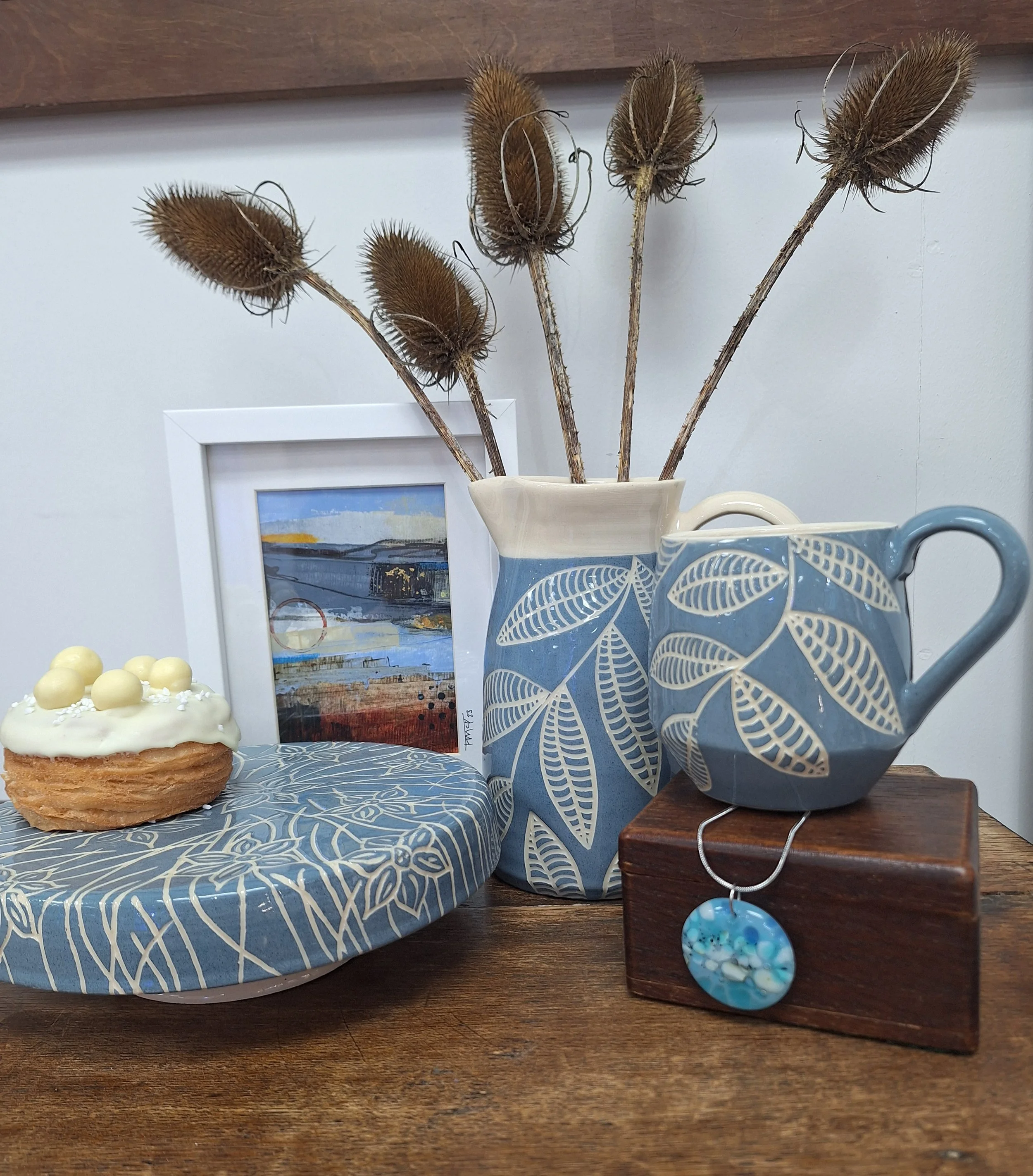
I am having a shop day at Origin as one of my stewarding shifts. The makers take it in turns at Origin to run the shop, just one of the many roles a maker has to embrace, and I am taking some quiet time between customers to share a little bit about the Floating Blue pottery and our process for making one of our pieces.
Floating Blue Pottery is based in Ceredigion on the banks of the Clettwr and Teifi rivers – an enchanted spot with woodland and water. Being Wales, water is perhaps the dominant force, but it is such a beautiful place to make ceramics.
So let me tell you a bit about how I make my mugs.
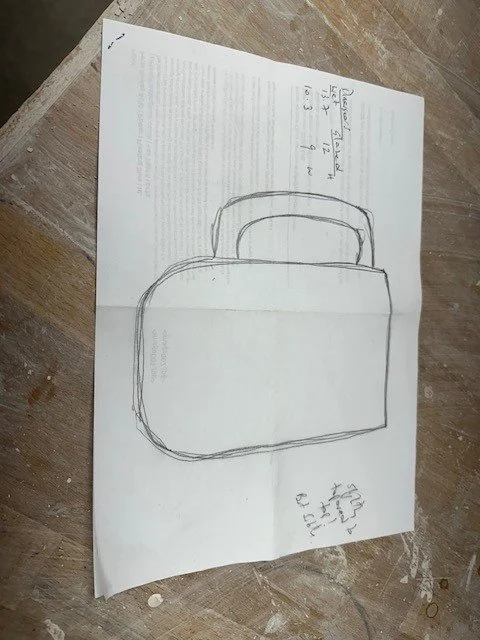
I try and start with a design – what am I looking to make? What size and what measurements? I then calculate the shrinkage rates, as clay shrinks significantly as it dries and is it is fired through the kiln stages.
I can then move to the really fun bit. The mud (well clay) and water.
A messy delightful process, where we wedge and weigh clay and throw each piece individually on a wheel.
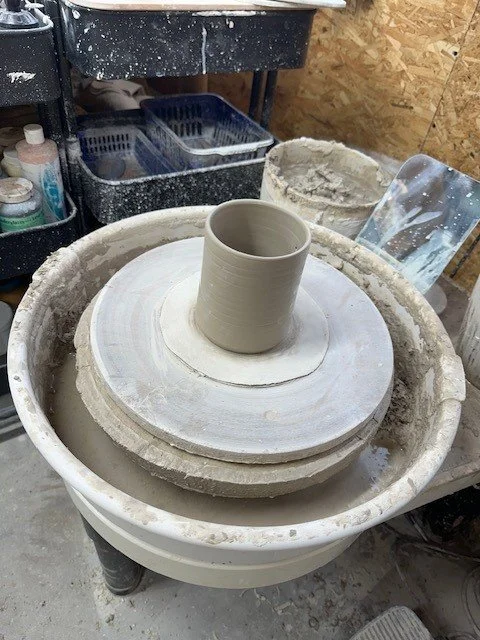
This leaves us with a fragile wet cylinder of clay which needs to be set aside to firm up a little so that it can be handled without distortion, and now we can trim.
Trimming the bottom of the mug allows me to remove any excess clay and apply my makers mark. I then extrude handles and allow these to firm up before attaching them to the mugs and leave them to fully dry.
This process is so important as the clay handles and mug bodies need to fully homogenise and then both need to become bone dry to prevent problems in the kiln.
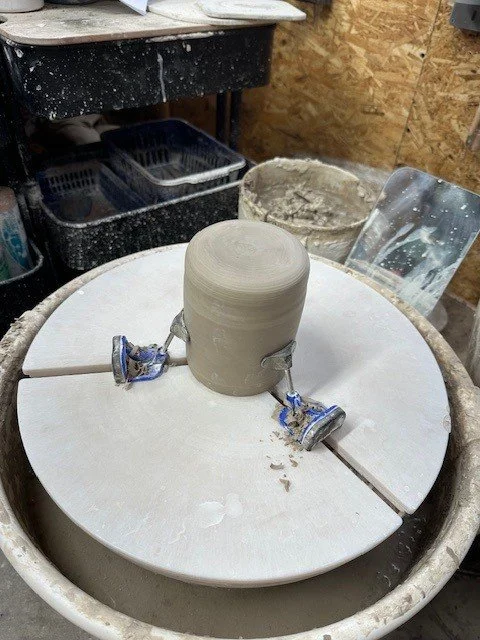
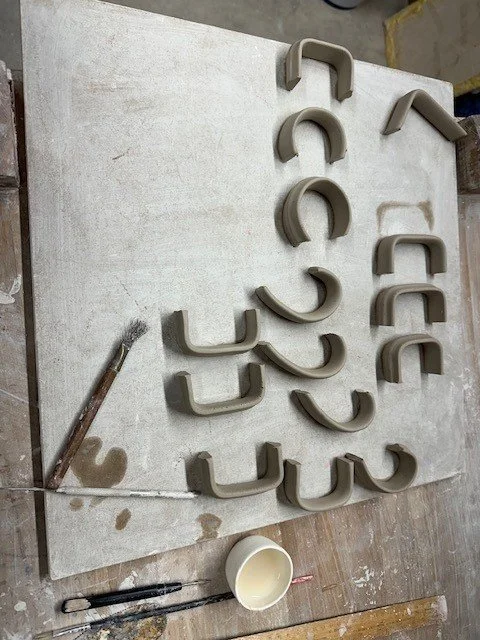
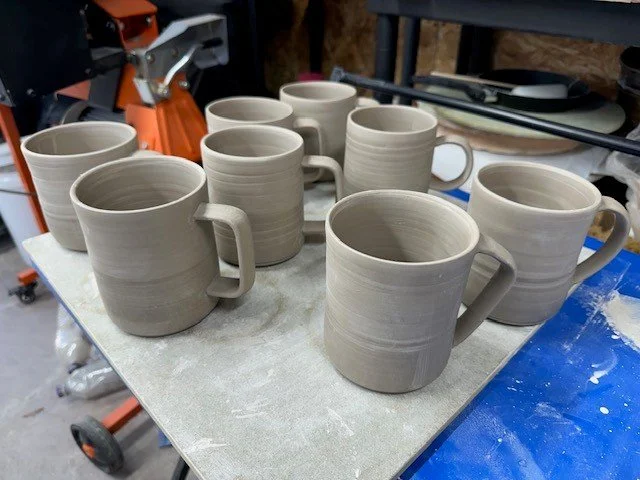
This picture shows the mugs drying.
Once dry they are checked for quality and any that don’t make the grade are broken up.
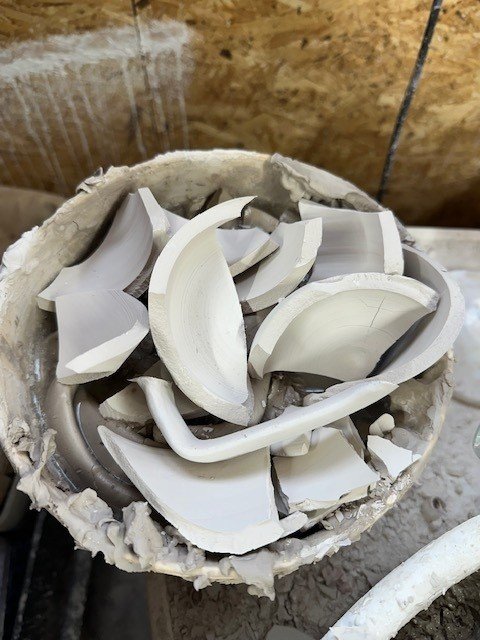
This isn’t wasteful because at this stage with the addition of a little water, the clay can be fully recycled and be used to make other items.
The acceptable mugs are put into the kiln for their bisque firing, a process that heats them to 1020 degrees centigrade and changes the clay into ceramic. An irrevocable chemical change.
You can see below the mugs in the kiln on the left (not quite dry enough to fire) and then how they look once removed having transformed into a beautiful white ceramic.
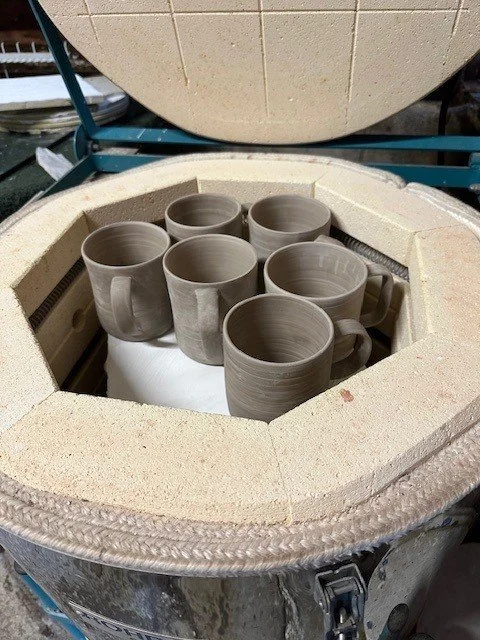

The mugs are now washed and allowed to dry, before we get to the application of the glazes.
We make our glazes from a variety of chemicals, which requires some careful measuring and testing.
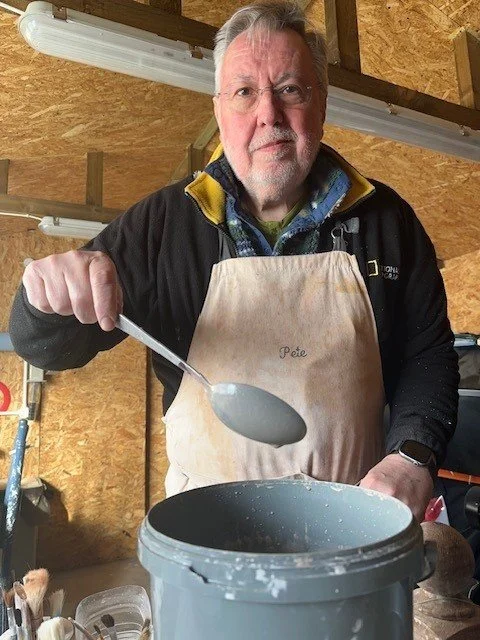
Glaze needs lots of stirring…..
Glazes are always suspended in water, although they are sometimes reluctant to stay suspended, which means stirring is a major part of a potters work during glazing.
The mugs are then individually dipped into a variety of different glazes depending upon the desired colours and effects being sought.
Glazes can and often are layered to encourage them to mix and flow during the intense heat of the glaze firing, before being allowed to dry and then put back into the kiln for a second glaze firing.
When they return from the glaze firing, which takes temperatures of over 1200 degrees centigrade and takes over 24 hours, the mugs have been transformed.
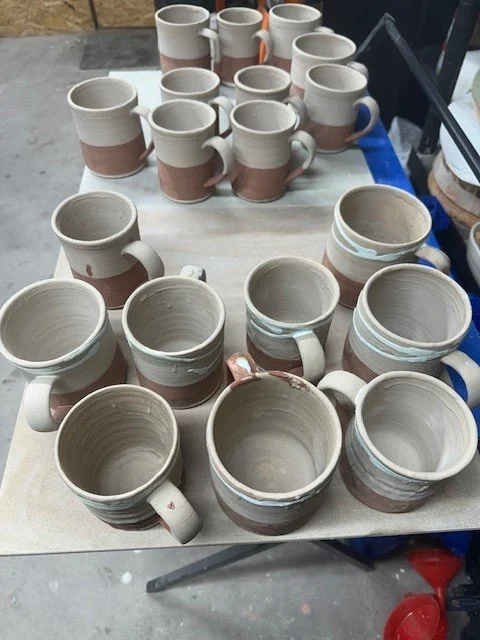
Glazed mugs awaiting firing.
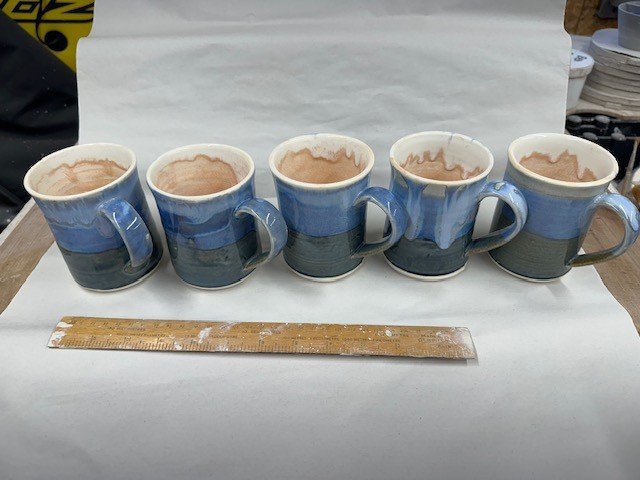
Mugs after glaze firing.
At this point, they are checked again and any damaged mugs are discarded. Cracks and glaze flaws can make the mugs unusable, or occasionally the glaze flows poorly and can just look just odd (these latter I save and use myself! I have quite a collection of really strange mugs).
Those that pass the check have their bottoms polished with a series of diamond abrasives. Not because this is essential, but because my mother always disliked roughness on the bottom of ceramics, and you should always listen to your mother!
As it happens, the effect I think is delightful, although the process is one of my least enjoyable.
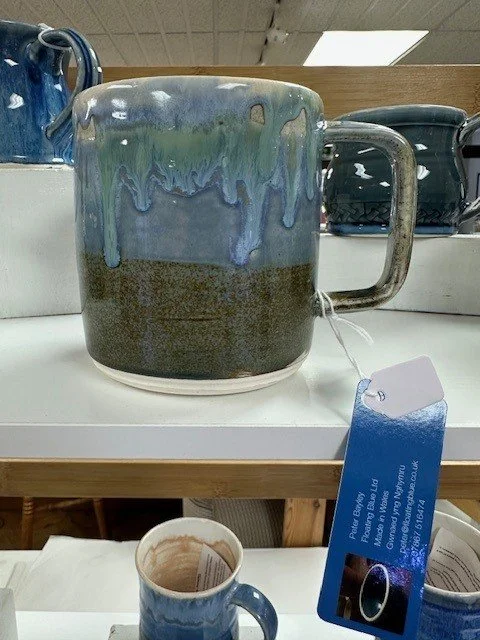
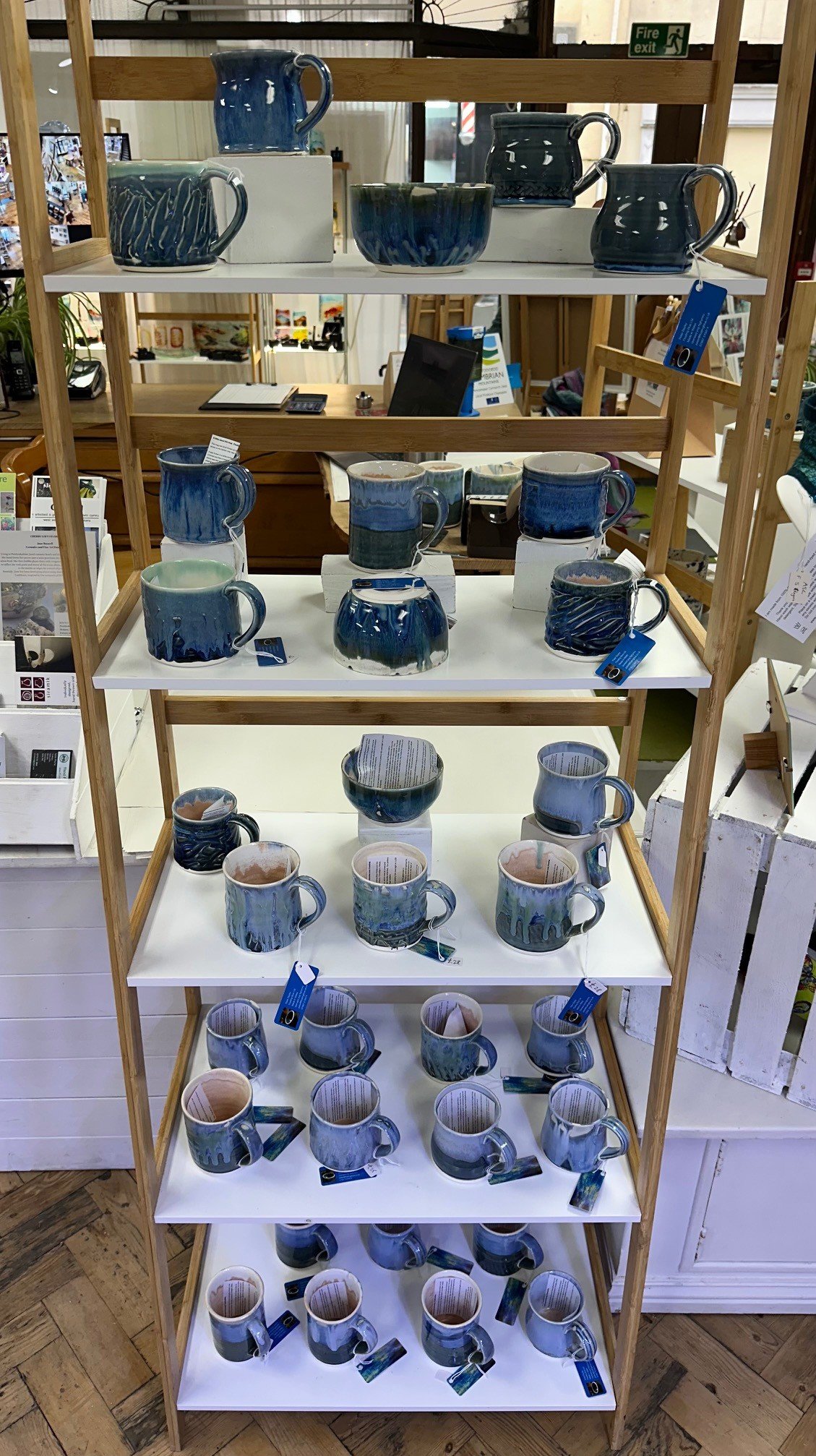
Finally, the mug is washed again, labelled and is transported to the Floating Blue shelf at Origin in Carmarthen, waiting for someone to fall in love with it.
I hope you enjoyed learning a little of the process and getting to know a little about the journey.
Peter [Peter@floatingblue.co.uk]

Happy customers who came in on the day I was writing this blog, and were happy to pose and send me a picture of their newly christened mugs, especially for the blog post :)